Recovery truck fleet insurance for breakdown and vehicle recovery operators
Spec lifts, beavertails and tilt and slide trucks on one schedule, with cover for the vehicles they carry and tow. One short form puts you in touch with specialist brokers who arrange cover for recovery operators across the UK.
- Spec lifts, beavertails, tilt and slides
- Customers' vehicles on the bed or on tow
- Roadside work around the clock
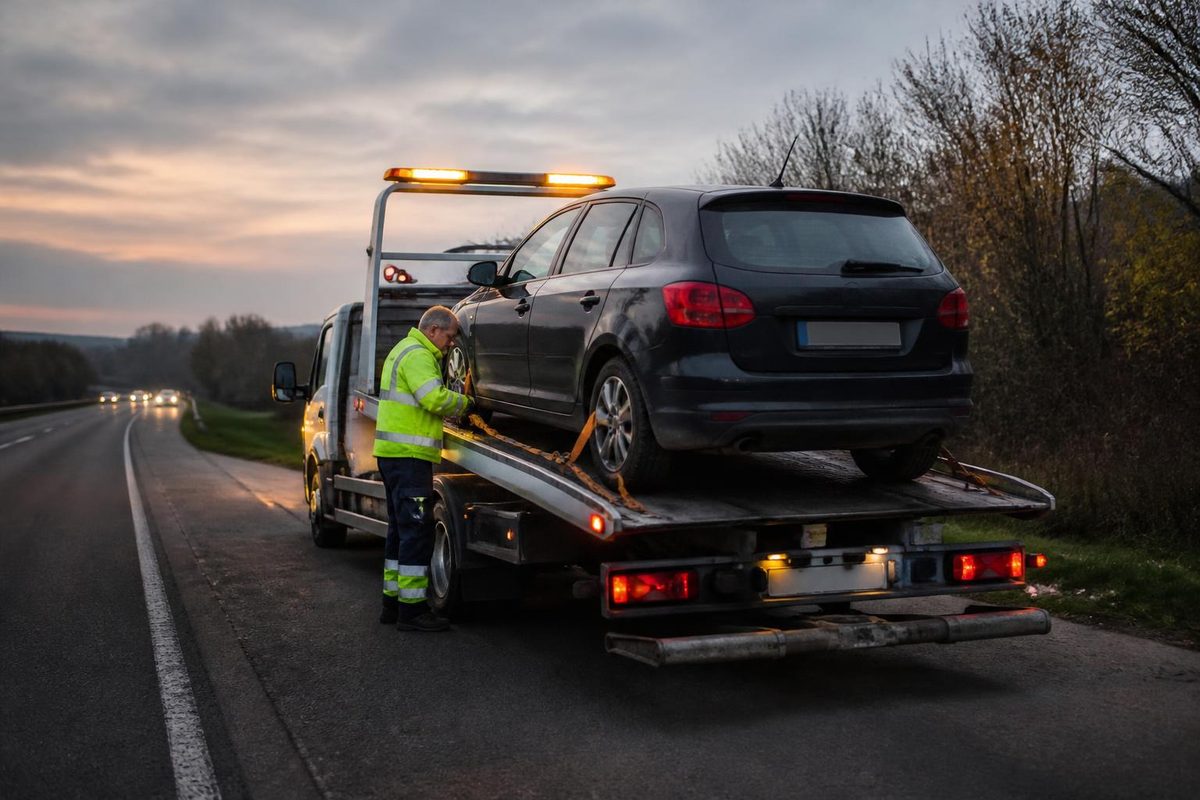
Recovery truck fleet insurance in brief
Recovery truck fleet insurance is one motor policy for a breakdown and recovery business running several recovery vehicles, covering the trucks themselves and, usually through an added section, the customers' vehicles they lift, carry or tow. It suits dedicated recovery firms; garages that only recover a customer's car now and then are often better placed on motor trade fleet insurance, which is built around driving vehicles in the trade's care.
Recovery work is unusual because the truck's job is to carry someone else's vehicle, often from a live roadside at night. Insurers look at the truck, the recovery equipment, the vehicles carried and the hours worked as one risk.
The trucks
Spec lifts, beavertails or tilt and slides: what is on the schedule?
Most recovery fleets mix body types so they can handle any call. The lighter trucks usually sit at or around 3.5 tonnes, while heavy recovery units are insured much like other lorries and overlap with HGV fleet insurance.
Vehicles in your care
Who covers the customer's car while it is on the back of the truck?
The recovery truck's motor policy covers the truck and damage it does to others. A customer's car being lifted, winched, carried or towed is a load in the operator's care, and cover for it is usually a separate section or policy.
Winching and lifting
Damage while a vehicle is pulled onto a bed or lifted by a spec lift.
- Scraped sills and bumpers on loading
- Straps and wheel lifts marking alloys
- A vehicle sliding off a tilted bed
On the bed or on tow
Damage to the carried vehicle while the truck is moving.
- The value limit for any one vehicle
- Prestige and classic cars may need agreeing
- Towed vehicles hitting the truck under braking
Keys and contents
Customers' keys and belongings left in vehicles collected by the business.
- Keys held for police or contract jobs
- Belongings left inside a recovered car
- Whether contents are covered at all
At the roadside
Night work and live roadsides: why recovery is rated differently
Recovery drivers spend much of their working time out of the cab and next to moving traffic. Insurers ask how much of the work is on fast roads.
- Hard shoulders and verges: Working beside fast traffic, often in the dark, with lights and signs set out.
- Night and weekend calls: Round-the-clock work means drivers on call and driving tired at times.
- Accident scenes: Clearing damaged vehicles after collisions, sometimes with debris or fluids on the road.
- Car parks and private land: Recovering vehicles from multi-storeys, retail parks and private drives.
Injury to staff while working at the roadside falls to employers' liability insurance rather than the fleet policy.
Contract work
Police, motor club and fleet contracts: what they ask of the operator
Many recovery firms earn a large share of their work through contracts.
| Type of work | What it involves | Worth checking |
|---|---|---|
| Police removals and seizures | Collecting abandoned, seized or crashed vehicles for a police force | Storage time, key handling and the value limits for vehicles held |
| Motor club and breakdown networks | Roadside callouts passed on by a breakdown provider | Response times, branding on trucks and the network's own cover requirements |
| Fleet and lease companies | Moving or recovering vehicles for leasing and contract hire firms | Higher-value vehicles and long-distance moves |
Contracts often set out the cover limits they expect, so it helps to share them with the broker before quoting.
Storage compounds
Vehicles held in the yard: compound and storage cover
Recovered vehicles often wait days or weeks in the operator's compound before being collected, repaired or scrapped. While they are there, they are off the road and outside the trucks' motor cover.
Vehicles in the compound
Cars, vans and lorries stored on site on behalf of customers or contract partners.
- Fire, theft and vandalism in the yard
- Total value of vehicles held at once
- Fencing, lighting and cameras
Moving vehicles around the yard
Shunting stored vehicles with forklifts, skates or the trucks themselves.
- Damage while repositioning cars
- Who is allowed to move them
- Public access to the compound
Before the quote
What do insurers ask a recovery operator?
Recovery quotes depend as much on the work as on the trucks. These details help the broker approach the right insurers.
- Truck types and weightsEach truck's body, weight, value and recovery equipment.
- Vehicles carriedThe typical and highest value of vehicles lifted, carried or towed.
- Contracts heldPolice, motor club, fleet or trade work, and what each requires.
- Hours and roadsNight work and how much time is spent on fast roads.
- DriversAges, licence categories, experience and any recovery training.
- Compound securityHow stored vehicles and keys are kept safe.
- Past claimsLoading damage, road accidents and compound losses in recent years.
How it works
One quote form, specialist fleet brokers
Insure Fleet is an information site, not an insurer or a broker. We link you to MyMoneyComparison.com, a comparison service that gives businesses a gateway to brokers who arrange fleet insurance every day.
Start your quote
Get my fleet quote takes you to our partner, MyMoneyComparison.com.
Describe the recovery fleet
The form asks about the vehicles, the work they do and who drives, so you can be matched with a specialist fleet broker.
Compare and decide
A broker contacts you with options, subject to insurers' acceptance criteria. There is no obligation to buy.
Before you buy
Questions for the broker about a recovery fleet
Recovery claims tend to land between the truck policy, the cover for carried vehicles and the compound. These points help find the gaps.
- What is the limit for any one carried vehicle?Prestige cars and vans may sit above the standard limit.
- Is loading and winching damage included?Some sections only cover damage while in transit.
- Are stored vehicles covered in the compound?Storage is often a separate section.
- Is a replacement truck available?A missing truck can mean losing contract callouts.
FAQs
Recovery truck fleet insurance questions
What is recovery truck fleet insurance?
Recovery truck fleet insurance is one motor policy for the spec lifts, beavertails, tilt and slide trucks and heavy recovery units a breakdown business runs. The schedule lists each truck with its use and drivers, and cover for carried vehicles is usually added as a section.
Is the car on the back of my truck covered by my motor policy?
Not usually by the motor section alone. Damage to a customer's vehicle while it is being loaded, carried or towed is normally covered under a separate section for vehicles in the operator's care, with a limit for any one vehicle.
Can a garage that recovers its own customers' cars use this kind of policy?
It can, but garages that only recover now and then often find recovery is already allowed for under their motor trade cover. Dedicated recovery firms with several trucks usually need a recovery fleet policy.
Do mobile mechanics who tow cars need recovery cover?
If towing or carrying customers' cars is part of the work, yes, that needs declaring. Mobile repair firms that fix cars at the roadside without moving them are covered on mobile mechanic fleet insurance.
Can on-call drivers take recovery trucks home?
Often, yes, as many operators need drivers to respond from home overnight. Commuting use and where each truck is parked are worth declaring, as a recovery truck outside a house is treated differently from one in a locked yard.
Can a new recovery business get fleet cover?
Yes, though insurers lean on the drivers' own records and experience until the firm builds a claims history. New business fleet insurance explains how that usually works.
Does Insure Fleet sell insurance?
No. Insure Fleet is an information site and an affiliate of MyMoneyComparison.com, a comparison service that gives businesses a gateway to specialist brokers. When you start a quote you continue to MyMoneyComparison.com, and we may be paid a small commission if you are matched with and speak to a broker.
Ready to insure your recovery trucks?
One form for the trucks and the vehicles they carry, specialist brokers, no obligation.