Carpenters and joiners fleet insurance for joinery workshops, site carpenters and shopfitters
Timber on the roof, saws in the back and finished joinery heading to site, with all the vans on one policy. Fill in one short form to reach specialist brokers used to joinery and shopfitting businesses.
- Timber loads on roof racks
- Workshop to site deliveries
- Shopfitting crews on the road
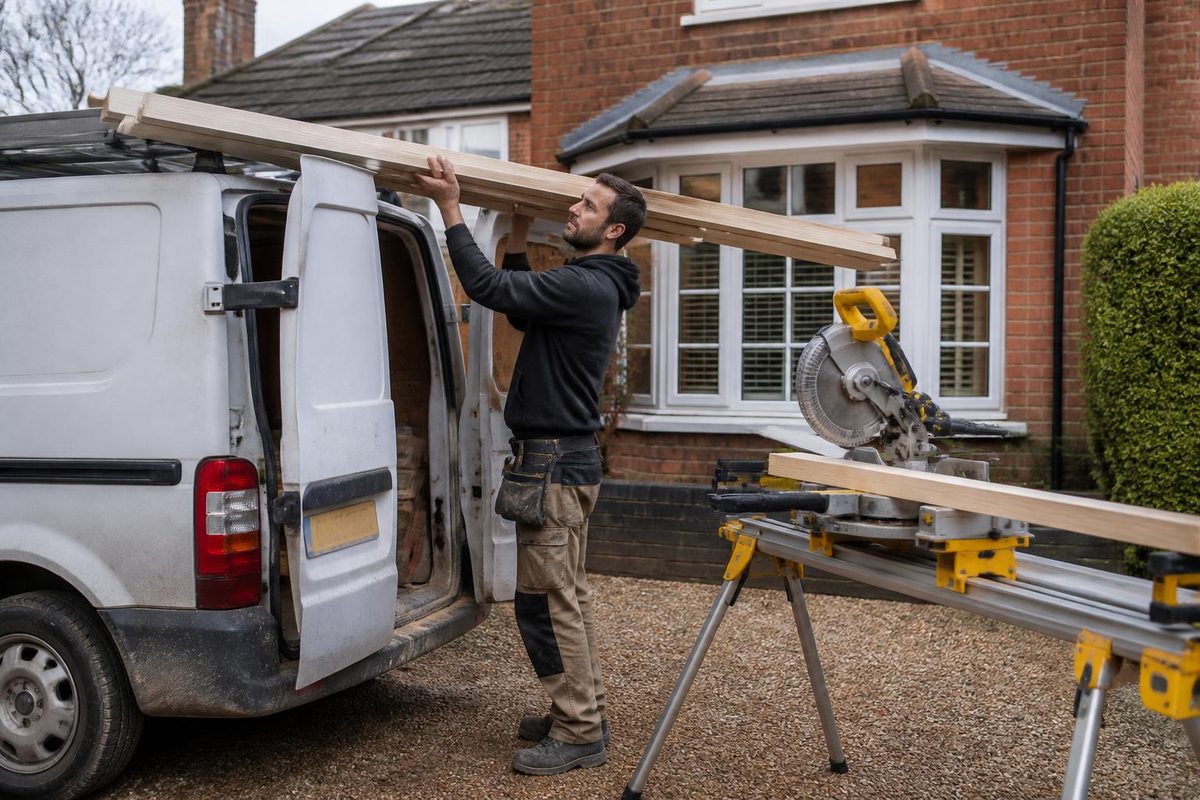
Carpenters and joiners fleet insurance in brief
Carpenters and joiners fleet insurance is one motor policy for the vans a carpentry, joinery or shopfitting business uses to move timber, tools and finished work between workshop and site. It is one branch of fleet insurance for trades, shaped by long loads on roof racks, expensive power tools and the question of who owns the joinery while it is in the van.
A small firm might have two site vans, while a joinery workshop with a fitting team can run long wheelbase vans, a Luton for kitchens and a car or two for estimators.
Three kinds of joinery fleet
How do carpentry and joinery businesses use their vans?
Most firms fit one of these patterns, or a mix of them. Where cars and larger vans share a schedule, mixed fleet insurance explains how the different vehicles sit together.
Site carpenters
Vans parked on building sites for first and second fix work, often for weeks at a time.
- Vans left on site overnight
- Site saws and power tools on board
- Work for main contractors
Joinery workshops
Made-to-measure windows, doors, stairs and kitchens built in a unit and delivered for fitting.
- Long wheelbase vans and Lutons
- Finished pieces carried for customers
- Regular unit to site runs
Shopfitting crews
Teams fitting out shops, restaurants and offices, sometimes far from home.
- Overnight stays near the job
- Crews sharing crew-cab vans
- Tight programmes and night work
Long loads
Timber on the roof rack: what insurers want to know
Carrying lengths of timber, sheet materials and worktops is everyday work for joiners, but a load that shifts or falls is a serious hazard to other road users. That is why brokers ask about roof racks and how loads are tied down.
- Weight on the roof: Every roof rack has a load limit, and timber is heavier than it looks, particularly when damp.
- Overhanging lengths: Long lengths that stick out past the van need marking and securing properly.
- Securing the load: Ratchet straps and stops keep a load from shifting under braking.
- The rack itself: Roof racks, rollers and internal racking are changes to the van to declare.
Damage caused to other people by a falling load is usually a third party matter under the motor policy, but only when the van and its rack have been described accurately.
Customers' goods
Kitchens, doors and staircases: whose goods are in the van?
Joinery made to order can become the customer's property before it is fitted, sometimes once it has been paid for. If a finished kitchen is damaged on the way to site, the motor policy will not pay to remake it.
Own goods use still fits
Delivering work you have made and will fit is part of your own trade, so own goods use usually applies. Hire and reward only comes in if the van carries other businesses' goods for a fee.
Cover for what is carried
Damage to finished joinery in transit is a separate question. Some firms add goods in transit insurance for high-value pieces such as fitted kitchens and bespoke staircases.
Saws and power tools
Table saws, mitre saws, routers and cordless kits are attractive to thieves and costly to replace. They usually need a tools policy, with limits for kit left in vans on site or at home.
Before you quote
Details a broker asks joinery firms
Having these to hand makes a joinery fleet quick to describe on the form and on the phone.
- Vehicle typesSmall vans, long wheelbase vans, Lutons and any cars used by estimators or managers.
- Where vans are keptA secure workshop yard, building sites or staff homes overnight.
- Distance travelledLocal fitting work or shopfitting jobs spread across the country.
- DriversJoiners, apprentices, fitters and subcontract carpenters who borrow a van.
- Value of tools carriedTypical totals per van, including site saws and cordless kits.
- Claims recordPast accidents, load incidents and thefts of tools or vans.
How it works
One quote form, specialist fleet brokers
Insure Fleet is an information site, not an insurer or a broker. We link you to MyMoneyComparison.com, a comparison service that gives businesses a gateway to brokers who arrange fleet insurance every day.
Start your quote
Get my fleet quote takes you to our partner, MyMoneyComparison.com.
Describe the joinery fleet
The form asks about the vehicles, the work they do and who drives, so you can be matched with a specialist fleet broker.
Compare and decide
A broker contacts you with options, subject to insurers' acceptance criteria. There is no obligation to buy.
Before you buy
Questions for the broker about a joinery fleet
The answers to these often separate a policy that suits a joinery firm from one that only looks similar.
- Is the roof rack declared on every van?Racks and rollers count as changes.
- Are tools covered while vans sit on site?Site conditions can differ from home or yard conditions.
- Does anything cover finished joinery in transit?Usually a separate cover, if needed.
- Can shopfitting crews drive at night?Out-of-hours fit-outs are common.
- Is a Luton treated differently?Bigger vans can carry different terms.
- Are subcontract carpenters allowed to drive?Check how non-employees are treated.
FAQs
Carpenters and joiners fleet insurance FAQs
What is carpenters and joiners fleet insurance?
It is one motor policy covering the vans, and sometimes cars, used by a carpentry, joinery or shopfitting business. All vehicles share one schedule and renewal date, with each one described for the work it does.
Do we need hire and reward cover to deliver kitchens we have made?
Usually not. Delivering and fitting your own work counts as carrying your own goods for the trade. Hire and reward would only apply if the vans carried goods for other businesses as a paid service.
Is timber on the roof covered if it falls off?
Injury or damage caused to other people by a falling load is normally a third party matter on the motor policy. The timber itself is not covered by the van policy, and insurers expect loads to be properly secured.
We are a small joinery firm with two vans. Is fleet cover worth looking at?
It can be. Some insurers offer fleet terms from two vans, and small fleet insurance explains what changes when moving from separate policies to one fleet policy.
Our shopfitting team stays away for weeks. Does that matter?
It is worth telling the insurer. Vans parked at hotels or on unfamiliar sites, long motorway runs and night work all form part of the risk. Where the fleet is mainly vans, van fleet insurance covers the general points.
We also do finishing work like decorating. Is that a problem?
Not usually, as long as the trade is described accurately. Firms where painting is the main work tend to have different stock and spray kit, as described on painters and decorators fleet insurance.
Does Insure Fleet sell insurance?
No. Insure Fleet is an information site and an affiliate of MyMoneyComparison.com, a comparison service that gives businesses a gateway to specialist brokers. When you start a quote you continue to MyMoneyComparison.com, and we may be paid a small commission if you are matched with and speak to a broker.
Get a quote for your joinery vans
Timber, tools and finished work: tell a specialist broker what your vans do.