Distribution fleet insurance for depot-based regional delivery fleets
Box lorries and large vans running scheduled routes out of a depot or warehouse, insured on one schedule whether they carry your own stock or freight for logistics clients. Filling in one short form lets specialist brokers who arrange cover for UK distribution fleets contact you.
- Box lorries and large vans
- Scheduled regional routes
- Own account or third-party logistics
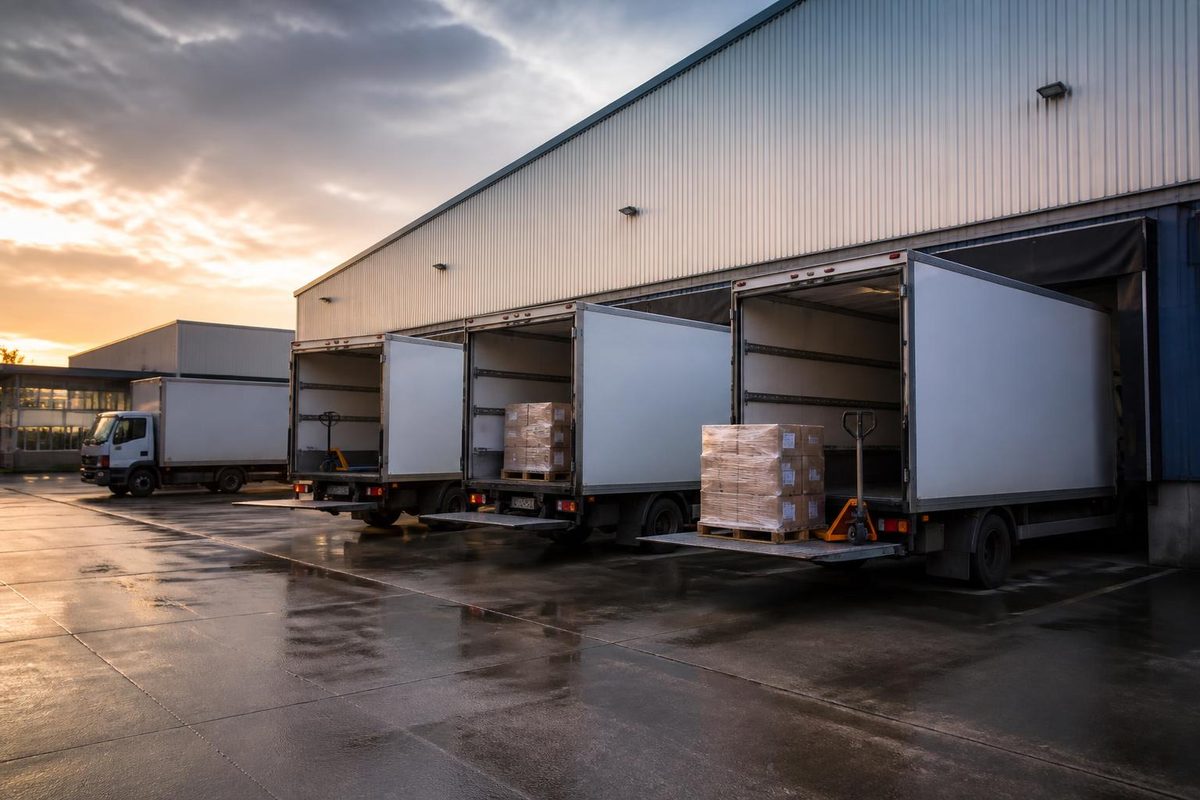
Distribution fleet insurance in brief
Distribution fleet insurance is motor cover for a business running box lorries and large vans on regular routes from a depot or warehouse, with every vehicle on one schedule. Manufacturers and wholesalers use it to deliver their own stock, and third-party logistics firms use it to run deliveries for their clients.
Unlike parcel rounds, a distribution route usually has a planned set of drops to shops, sites or other depots, run to a timetable. It is one of the transport trades included in trade fleet insurance.
Whose goods
Own account or third-party logistics: who owns the goods on the lorry?
Two identical box lorries can be insured quite differently depending on whose stock is in the back and who is paying for the delivery.
| Point | Own account distribution | Third-party logistics |
|---|---|---|
| Whose goods are on board | The business's own stock | Clients' goods, carried for payment |
| Usual class of use | Carriage of own goods | Haulage, or hire and reward |
| Cover for the load | Stock cover, sometimes extended to transit | Goods in transit set to each client contract |
| Questions insurers ask | Stock value per vehicle and delivery pattern | Client contracts, liability terms and warehouse links |
Logistics firms that also store clients' goods in their warehouse usually arrange that cover separately from the fleet.
Routes and hours
Scheduled routes, night trunking and early deliveries
Distribution runs to a timetable. Lorries often leave the depot in the small hours to reach stores before opening, and trunking between depots happens through the night.
- Regional delivery routes: Planned drops to shops, sites and customers across a region, often the same each week.
- Night trunking: Lorries running between depots overnight, usually one long motorway leg each way.
- Timed store deliveries: Deliveries booked into slots, sometimes before the store opens, with the driver unloading alone.
- Collections and returns: Empty cages, pallets and returned stock picked up on the way back to the depot.
Rounds with dozens of parcel stops in vans are a different pattern of work, covered on courier fleet insurance for multi-drop parcels.
Tail lifts and bays
Tail lifts, cages and loading bays: where distribution claims start
Many distribution claims happen at walking pace: reversing onto bays, cages rolling off tail lifts and kerbs clipped in tight service yards.
Tail lifts and lifting gear
A tail lift is fitted equipment and usually needs to be declared on the schedule.
- Damage to the lift itself may need its own cover
- A cage rolling off the lift is a liability matter
- Inspection records are often asked about
Loading bays and service yards
Low-speed bumps at the depot and at customers' yards make up a large share of claims.
- Reversing cameras and sensors
- Banksmen at busy bays
- Damage to customers' doors and buildings
Solo drivers or a driver's mate
Some routes run with two people, others with the driver handling every cage alone.
- Manual handling of cages and pallets
- Agency staff in peak weeks
- Employers' liability cover
Mixed weights
Mixing 7.5 tonne lorries, larger rigids and vans on one distribution fleet
Each vehicle is rated on its own weight and work, but they can share one schedule. The lorries are assessed much like any HGV fleet insured by weight and body type, while the large vans may be rated as they would be on van fleet insurance. A business with just one box lorry can find single-vehicle cover on the sister site hgv.insure.
A newer car licence does not include 7.5 tonne lorries without an extra test, so each driver's licence categories are worth checking.
Before a quote
What is a distribution business asked before a quote?
A distribution fleet quote is shaped by the depot, the routes and the goods. These are the details worth gathering first.
- Depot locationsWhere vehicles are based and how the yards are secured.
- Route patternRegional rounds, trunking legs and the miles each vehicle covers.
- Hours runNight trunking, early store deliveries and weekend work.
- Whose goodsOwn stock, clients' freight or both on the same fleet.
- Fitted equipmentTail lifts, fridge units and load restraint systems.
- Driver poolLicence categories, agency use and checks on new starters.
How it works
One quote form, specialist fleet brokers
Insure Fleet is an information site, not an insurer or a broker. We link you to MyMoneyComparison.com, a comparison service that gives businesses a gateway to brokers who arrange fleet insurance every day.
Start your quote
Get my fleet quote takes you to our partner, MyMoneyComparison.com.
Describe the distribution fleet
The form asks about the vehicles, the work they do and who drives, so you can be matched with a specialist fleet broker.
Compare and decide
A broker contacts you with options, subject to insurers' acceptance criteria. There is no obligation to buy.
Before you buy
Questions worth asking about a distribution fleet policy
Distribution policies differ most on equipment, night work and the loads. These are the points worth raising.
- Are tail lifts and fridge units declared?Fitted equipment often needs listing.
- Is night trunking included?Overnight running may change the terms.
- Does each lorry match the goods it carries?Own stock and clients' goods are rated apart.
- Are agency drivers covered?Some insurers approve them before their first shift.
- What if a fridge unit fails?Spoilt stock is not usually a motor claim.
- Is damage at customers' premises covered?Bays and doors can fall between policies.
FAQs
Distribution fleet insurance questions
What is distribution fleet insurance?
Distribution fleet insurance is a motor policy covering the box lorries and large vans a business runs on regular routes from a depot or warehouse. Each vehicle is listed with its own weight and use on one schedule, whether it carries the business's own stock or goods for clients.
Is distribution fleet insurance different from haulage fleet insurance?
There is overlap. Distribution centres on planned routes from a depot, often for the business's own stock or a few logistics clients. Firms that take loads from many customers, with spot work and subcontracting, fit better under haulage fleet insurance for contract and spot loads.
Are tail lifts covered by the fleet policy?
The lorry is covered, but cover for the tail lift itself and for injuries while using it varies. Tail lifts are usually declared as fitted equipment, and some insurers ask about inspections and training.
Can agency drivers drive our distribution lorries?
Usually, as long as each agency driver meets the minimum age, experience and licence category set by the insurer. Firms with a changing pool of drivers may look at any driver fleet insurance rather than naming each driver.
Who needs goods in transit cover in distribution?
Logistics firms carrying clients' goods usually need goods in transit cover set to each contract. Businesses moving their own stock may find their stock cover already extends to transit, which is worth confirming.
Can refrigerated lorries go on a distribution fleet?
Yes. Fridge units are usually declared as fitted equipment. A unit breaking down and spoiling the load is not normally a motor claim, so many chilled distribution firms add separate cover for spoilt goods.
Does Insure Fleet sell insurance?
No. Insure Fleet is an information site and an affiliate of MyMoneyComparison.com, a comparison service that gives businesses a gateway to specialist brokers. When you start a quote you continue to MyMoneyComparison.com, and we may be paid a small commission if you are matched with and speak to a broker.
Ready to get your distribution fleet covered?
One form, specialist logistics brokers, no obligation.