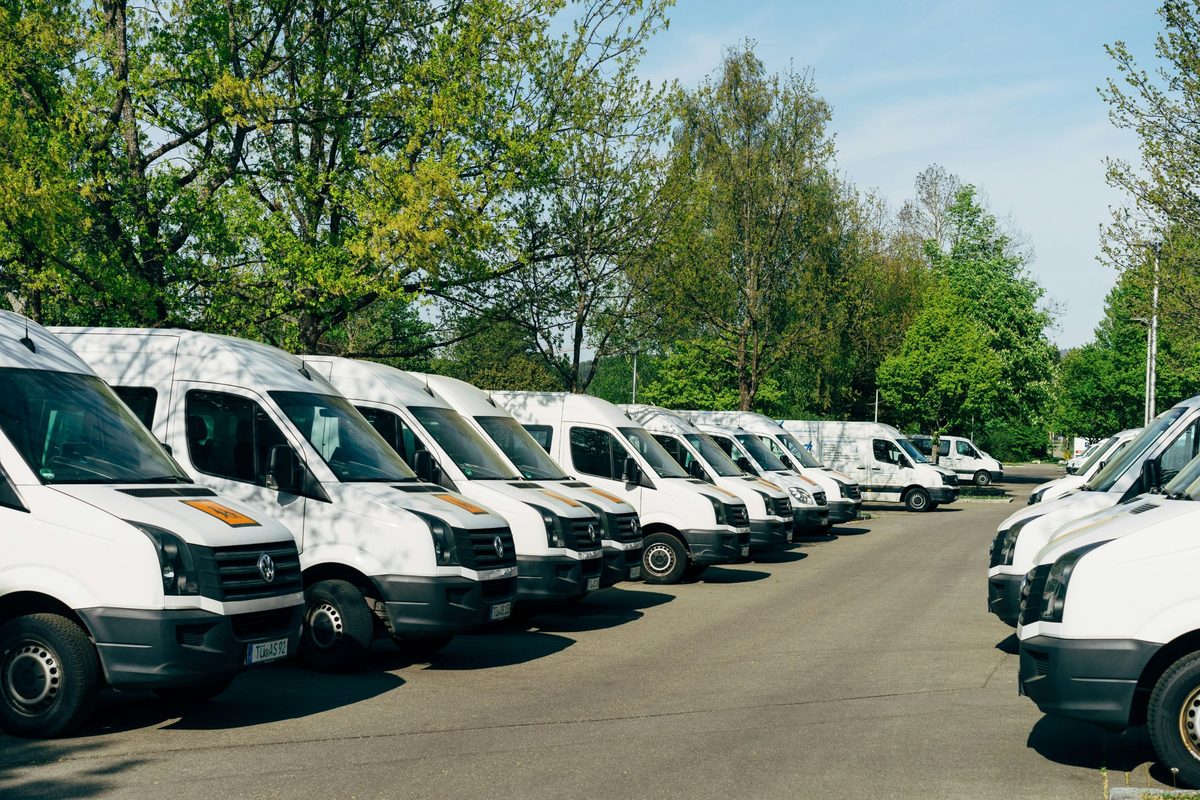
A fleet insurance premium is worked out from the risk an insurer sees across the whole business: the vehicles, what they are used for, who drives them, where they are kept and the claims the business has made. Each insurer weighs these things in its own way, which is why quotes for the same fleet can look quite different.
This guide walks through what insurers look at, in roughly the order a broker will ask about it, and the parts of the price a business can influence before its next quote or renewal.
In short: insurers price a fleet on the vehicles, how they are used, the drivers, where they are kept, the claims history and the cover chosen. Clear, accurate details at quote stage usually lead to closer, more comparable prices.
Why a fleet is priced as one risk
A fleet policy puts every vehicle on one schedule with one renewal date, so the insurer prices the business as a whole rather than each vehicle in isolation. A van that would look expensive on its own can sit comfortably within a well-run fleet, and the reverse is also true.
As a fleet grows, the business’s own record starts to matter more than general assumptions about its type of work. That is why larger fleets are often priced on their own claims record, while a handful of vehicles moving onto one policy for the first time relies more on the drivers and the type of business.
The vehicles on the schedule
Every vehicle adds to the price according to what it is and what it would cost to repair or replace. Insurers usually look at:
- the make, model and value of each vehicle
- the vehicle type and weight, from cars and small vans up to lorries
- any conversions, racking, tail lifts or fitted equipment
- security features such as trackers, immobilisers and alarms
- how many vehicles there are and how often the list changes during the year
A mix of vehicle types on one schedule is normal. A mixed fleet of cars, vans and lorries is priced vehicle by vehicle within the same policy, and heavier goods vehicles bring their own questions, which our guide to insuring a lorry fleet covers in more detail.
Electric vehicles can be priced differently too, mainly because of repair costs, battery damage and the time a vehicle can spend off the road. Our page on electric cars and vans in a fleet explains what insurers tend to ask.
What the vehicles are used for
The class of use on each vehicle has a direct effect on the premium, because it tells the insurer how much time the vehicle spends on the road and what it carries.
- Social, domestic and pleasure: personal use, often added for staff who take vehicles home.
- Commuting: travel between home and a fixed place of work.
- Business use: travelling between jobs, sites, clients and suppliers.
- Carriage of own goods: carrying the business’s own tools, stock and materials.
- Hire and reward: carrying other people’s goods or passengers for payment.
Hire and reward usually costs more because the vehicles cover more miles and carry goods that belong to someone else. A business doing multi-drop or same-day delivery work is rated on that basis. Getting the class of use right on every vehicle matters as much for claims as for price: a vehicle used outside its stated use may not be covered.
Who drives, and their records
Drivers are one of the biggest parts of any fleet premium. Insurers typically ask about each driver’s age, how long they have held a full UK licence, and any motoring convictions or claims in recent years.
The way drivers are listed also changes the price. A named driver policy lists each person allowed to drive, which gives the insurer a clear picture. Any driver fleet cover lets anyone the business approves drive, usually with conditions on age and licence history, and the insurer prices in that flexibility.
Drivers with points or past offences do not usually stop a fleet being insured, but they can affect the terms. Some insurers apply an extra excess or exclude certain drivers, and specialist insurers exist for fleets that include drivers with convictions.
Where the vehicles are kept
Insurers look at where each vehicle spends the night and where the business is based. A locked yard with lighting and cameras is generally viewed more favourably than vehicles left on the street or on staff driveways.
Postcode matters as well, because theft and accident rates vary from area to area. Businesses with vehicles spread across several sites, or staff taking vans home, are usually asked for each location.
The fleet’s claims history
Past claims are one of the clearest signals an insurer has. Most insurers ask for a claims experience letter from the current insurer, showing claims over recent years, how much was paid and whether any claims are still open.
The type of claim matters as much as the number. A pattern of small reversing knocks tells a different story from a single large injury claim, and insurers also look at whether the business took steps afterwards, such as driver training or new vehicle checks.
A business with no fleet claims record yet is priced mainly on its drivers and the work it does. Our guide to fleet cover for new businesses explains how insurers approach a start-up with no history in its own name.
The type of business and the work it does
Two businesses with identical vans can receive different prices because the work they do is different. A van carrying a plumber’s stock, one carrying scaffold boards and one making parcel deliveries each spend their day differently, park in different places and carry different risks.
This is why insurers ask what the business does, where it works and what the vehicles carry. Our trade fleet guides look at the questions insurers ask for each type of trade and service business.
Policy choices that change the price
Some of the premium comes down to choices made when the policy is set up. These are usually the quickest things to review:
- Level of cover: comprehensive, third party fire and theft, or third party only, which can differ by vehicle.
- Excess: a higher voluntary excess usually lowers the premium, as long as the business can comfortably pay it on a claim.
- Add-ons: breakdown, replacement vehicles, windscreen cover and similar extras each add to the cost.
- Driver terms: age limits, named drivers or any driver cover.
- Payment: paying annually or in instalments can change the total cost, depending on the broker or insurer.
Cutting cover to lower the price is a trade-off rather than a saving. It is worth checking what each option would mean if a vehicle were off the road for weeks.
How to prepare before getting quotes
Clear, accurate information helps a broker present the fleet well and helps insurers price it without guessing. Before starting a quote, it helps to have:
- a vehicle list with registrations, values, weights and any conversions
- the class of use for each vehicle
- driver details, including licence history and any convictions
- where each vehicle is kept overnight
- a claims experience letter from the current insurer
- a short note of any changes, such as new drivers, telematics or extra security
Businesses moving from separate policies onto one schedule for the first time can find more on that step in our guide to bringing a few vehicles onto one fleet policy.
Frequently asked questions
Why did my fleet premium go up when we made no claims?
Premiums can rise even without claims, for example when repair costs rise across the market, when vehicles or drivers change, or when an insurer changes its view of a type of business. It is worth asking the broker what changed and whether other insurers see the fleet differently.
Does adding a vehicle during the year change the price?
Usually yes. Adding a vehicle mid-term normally means an extra premium for the rest of the policy year, and removing one can lead to a refund, depending on the insurer’s terms.
Do younger drivers always make a fleet more expensive?
Younger and newly qualified drivers often increase the premium or attract a higher excess. Some insurers set a minimum age, while others accept younger drivers on agreed terms.
Can telematics or dashcams lower a fleet premium?
Some insurers take them into account, especially when the business can show how the data is used to improve driving. Others simply note them, so it is a question worth raising with the broker.
Does Insure Fleet set or quote fleet premiums?
No. Insure Fleet is an information site and a trading style of Mymoneycomparison.com Ltd. Quote requests continue to MyMoneyComparison.com, a comparison service that gives businesses a gateway to specialist brokers. Prices are set by insurers, and any quote comes through the broker you are matched with.