Security company fleet insurance for patrol cars, response vans and keyholding
The marked patrol cars and vans a security firm runs through the night, insured together with one renewal date. One short form puts you in touch with specialist brokers who arrange cover for UK security companies.
- Mobile patrols and alarm response
- Client keys carried at night
- Vehicles shared across shifts
Security company fleet insurance in brief
Security company fleet insurance is one motor policy that covers the patrol cars, response vans and other vehicles a security firm runs, instead of insuring each vehicle on its own. Among the many kinds of fleet insurance for trades and service firms, this one is shaped by night driving, lone officers and vehicles that spend hours parked at empty sites.
Insurers look at the type of security work, how many hours the vehicles are on the road, how client keys are kept and how vehicles pass between officers at each shift change.
The vehicles
What vehicles does a security company run?
Patrol work is mostly done in cars, so the fleet often has more in common with a car fleet than a trade van fleet, with a few vans and towed units alongside.
Night work
Patrols, alarm calls and driving through the night
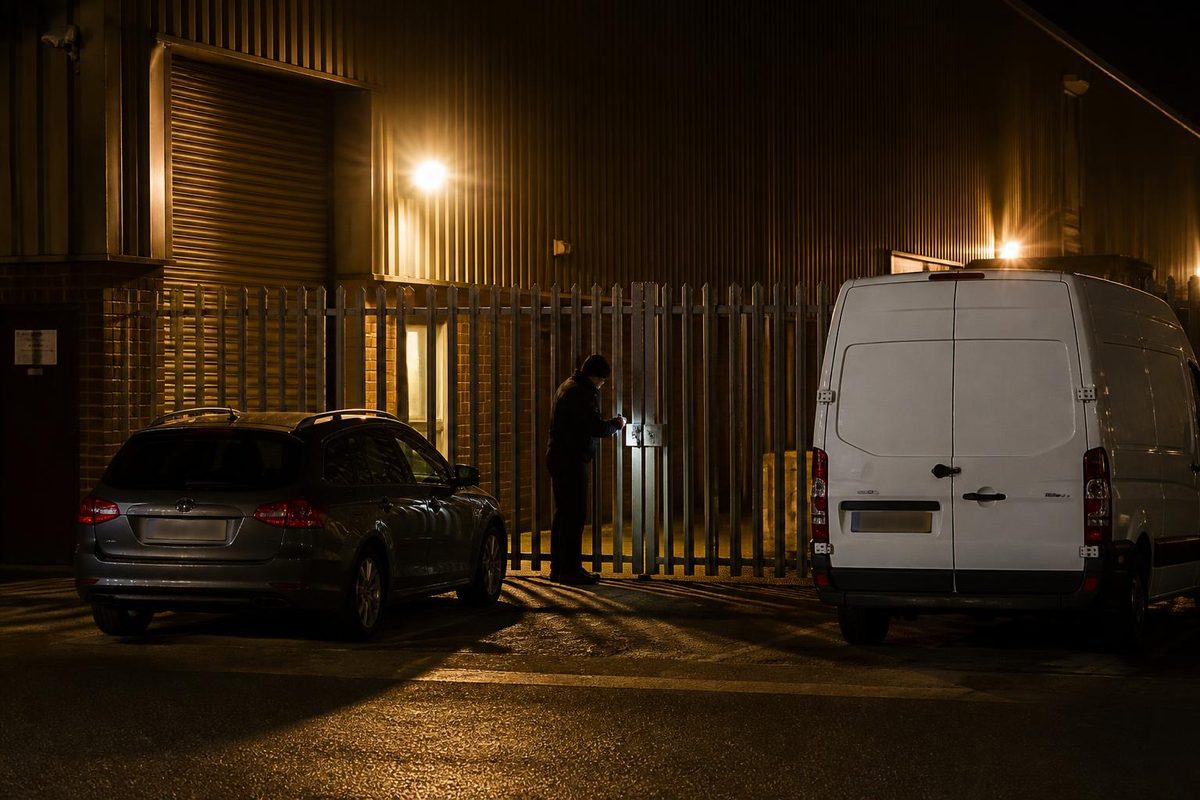
Security vehicles are busiest when everyone else is asleep. Insurers see night driving, tired drivers and quiet industrial estates as part of the risk, and they also look at how long vehicles sit unattended.
- Patrol routes: Officers driving the same round of sites several times a night, often on unlit service roads and car parks.
- Alarm response: Being sent to an alarm at short notice, sometimes at the same time as the police, but without any emergency vehicle status.
- Parked at client sites: Cars left in client car parks while officers check buildings on foot, or for a whole shift at a static post.
- Lone working: Most patrol officers drive alone, which affects how accidents and breakdowns are dealt with at night.
- Beacons and livery: Amber beacons, light bars and reflective markings are worth declaring to the insurer, as they change the vehicle's appearance and value.
Keyholding
How do client keys affect a security firm's motor cover?
Keyholding firms carry keys, fobs and alarm codes for the sites they protect. The motor policy covers the vehicle, not the keys, but insurers still want to know how they are handled. A locksmith firm faces a different question, about lock stock and cutting machines in its vans, which is covered on locksmith fleet insurance.
Keys kept in the vehicle
Some firms carry client keys in a locked safe fitted inside the patrol car.
- Insurers may ask about the safe and its fixing
- Keys coded rather than labelled with addresses
- Theft of the car then means theft of the keys
Keys held at base
Others keep keys at a control room and sign them out for each call.
- Records of who holds each key
- Fewer keys on the road at once
- Often seen well by insurers
Loss of a client's keys
If keys are lost or stolen, the cost of changing locks at a client's site is not a motor claim.
- Usually a separate liability question
- Some contracts set out who pays
- A point to put to the broker
Officers behind the wheel
Shift changes, shared vehicles and officer checks
Patrol cars often run around the clock, handed from one officer to the next at each shift change. Insuring every officer by name can be awkward, which is why many firms look at any driver fleet insurance, subject to age and licence history conditions for every officer.
Licensed and checked officers
Front-line security staff usually hold an individual security licence and go through background checks.
- Insurers may ask how drivers are screened
- Driving licence checks sit alongside vetting
- Points and bans still need declaring
Vehicles handed over at each shift
One car may be driven by three or four officers across a week.
- Open driving with conditions is common
- Vehicle checks at handover help
- Damage reporting between shifts matters
Guards driving their own cars
Static guards often drive their own cars to site and may use them to cover another post.
- Business use needed on their own policy
- Not usually part of the fleet
- Worth checking where cover stops
Before the quote
What do insurers ask a security company?
Brokers who know this sector ask about the work as much as the vehicles. Having the details ready makes the quote quicker.
- Type of security workMobile patrols, alarm response, keyholding, dog handling, events or static guarding.
- Hours on the roadNight patrols only, or vehicles in use around the clock.
- Where vehicles are parkedAt base, at officers' homes or at client sites during shifts.
- How keys are heldFitted safes, coded tags, or a control room signing keys in and out.
- DriversAges, licence history and how many officers share each vehicle.
- Equipment on boardBeacons, cages, cameras and any towed CCTV or lighting towers.
- Previous claimsAccidents, damage at client sites and thefts in recent years.
How it works
One quote form, specialist fleet brokers
Insure Fleet is an information site, not an insurer or a broker. We link you to MyMoneyComparison.com, a comparison service that gives businesses a gateway to brokers who arrange fleet insurance every day.
Start your quote
Get my fleet quote takes you to our partner, MyMoneyComparison.com.
Describe the security company's vehicles
The form asks about the vehicles, the work they do and who drives, so you can be matched with a specialist fleet broker.
Compare and decide
A broker contacts you with options, subject to insurers' acceptance criteria. There is no obligation to buy.
Before you buy
Questions for the broker about a security fleet
Security firms tend to find gaps after a night-time crash or a stolen patrol car. These are the points worth raising before signing.
- Are all officers covered to drive at handover?Shared vehicles need driver terms that match the rota.
- Is the car covered while parked at a client site?Some policies set conditions for vehicles left for long periods.
- Are beacons, cages and cameras included?Fitted equipment may need declaring to be covered.
- Are towed CCTV towers insured on the road?Towing needs declaring, and the tower itself may need separate cover.
- Will a replacement patrol car be supplied?Contracts can be missed if a car is off the road.
- Do contracts ask for proof of cover?Many clients ask for certificates before work starts.
FAQs
Security company fleet insurance questions
What is security company fleet insurance?
Security company fleet insurance is a fleet motor policy for the patrol cars, response vans and other vehicles run by a security firm. All the vehicles share one schedule and one renewal date, with driver terms set around shift work and shared vehicles.
Is security patrol vehicle insurance different from a normal car policy?
The cars themselves are often ordinary, but the use is not. Insurers want to know about night driving, how often vehicles are left unattended at client sites, the keys carried and how many officers share each car.
Does the fleet policy cover cash in transit?
No. Collecting and delivering cash or valuables is specialist work with its own insurers and its own vehicles. A security firm that moves into cash in transit would usually need a separate, specialist arrangement.
Can a new security company get fleet cover?
Often, yes, though a firm without a claims record may find fewer insurers willing to quote. There is more on this on new business fleet insurance, including what helps when there is no fleet history yet.
Do patrol cars need to be marked?
That is a business choice. Livery helps deter intruders and reassures clients, while unmarked cars can suit discreet keyholding work. Either way, livery and beacons are worth declaring to the insurer.
Are other businesses holding keys covered in a similar way?
Keys are a question for any business that enters clients' premises. Care providers face something similar with key safes, as described on home care fleet insurance.
Does Insure Fleet sell insurance?
No. Insure Fleet is an information site and an affiliate of MyMoneyComparison.com, a comparison service that gives businesses a gateway to specialist brokers. When you start a quote you continue to MyMoneyComparison.com, and we may be paid a small commission if you are matched with and speak to a broker.
Ready to insure your patrol vehicles together?
One form for the whole security fleet, specialist brokers, no obligation.