Utilities and telecoms fleet insurance for field engineers and street works crews
Engineer vans for water, gas network, power and broadband contracts on one schedule. One short form connects you with specialist brokers who arrange fleet cover for network contractors across the UK.
- Roof ladders, cable drums and test kit
- Stops beside traffic with signs and cones
- Employed and subcontracted installers
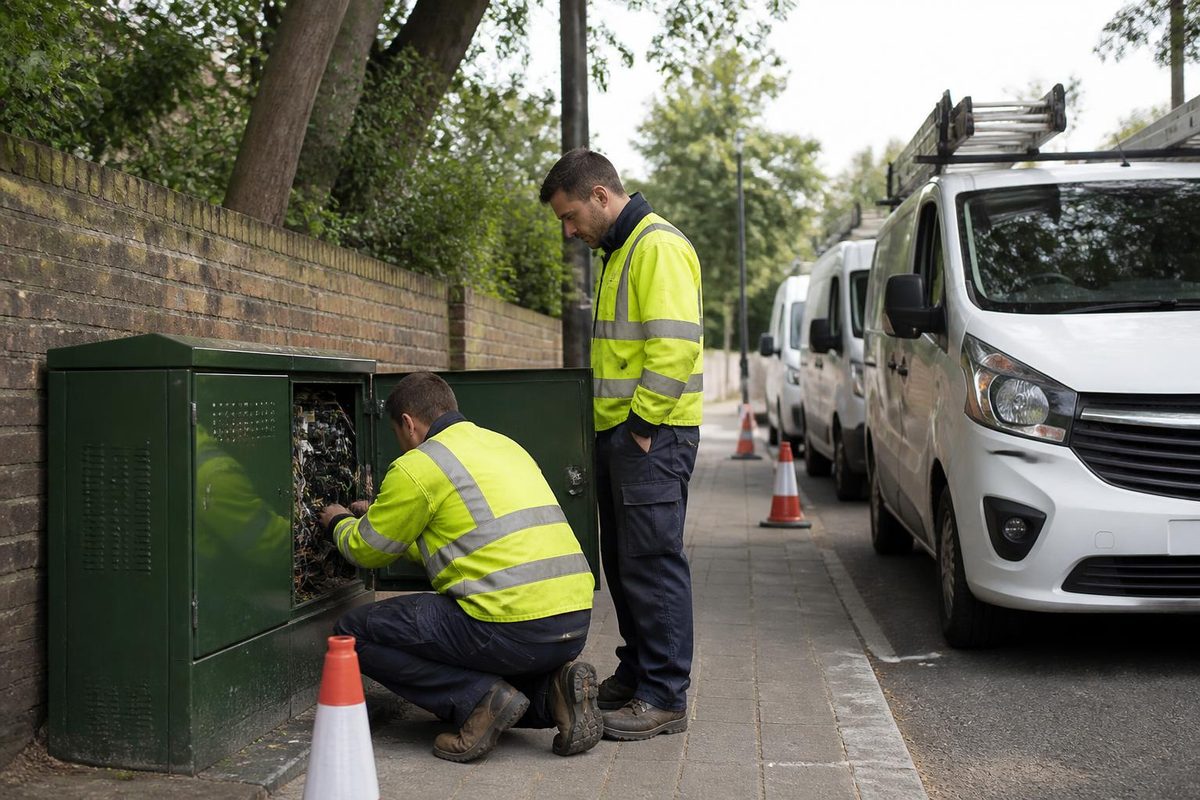
Utilities and telecoms fleet insurance in brief
Utilities and telecoms fleet insurance is one motor policy for the vans, pickups and cars a contractor uses to build, connect and maintain water, gas, power and broadband networks. It sits within fleet insurance for trades, but the questions are shaped by network work: engineers parked at the kerb beside cabinets and manholes, vans that double as mobile stores for cable and fittings, and driver pools that can include self-employed installers as well as staff.
Network operators often ask contractors to show their cover before joining a framework, and the motor policy is usually one item on that list alongside liability covers and driver checks.
The vehicles
Which vehicles do network contractors put on a fleet policy?
Most of the fleet is usually vans, which is why many contractors start from van fleet insurance and then add the pickups, cars and towed kit that the contract needs. Each vehicle is listed with its own use.
At the roadside
Why does parking at a cabinet or chamber matter to the insurer?
Network engineers spend much of the day stopped beside the road rather than in a car park. Larger highway and trench schemes with plant and lane closures are a different picture, covered under civil engineering fleet insurance.
Short stops at street furniture
Pulling up beside a cabinet, pole or meter box for a few minutes or a few hours.
- Parked vans are sometimes clipped by passing traffic
- Signs, cones and beacons are commonly asked about
- Hazard lighting on the van may be worth declaring
Working on the pavement
Opening chambers and footway boxes with the van close by and barriers set out.
- Vehicles left running for power can raise theft questions
- Keys left in an unattended van are a common exclusion
- Pedestrian injury is usually a liability matter
Lanes, tracks and remote sites
Pole routes, pumping stations and masts reached down narrow lanes and farm tracks.
- Off-road use may need mentioning
- Pickups are often the vehicle of choice
- Lone working affects how breakdowns are handled
Inside the van
Cable drums, test sets and ladders: what the motor cover leaves out
A network engineer's van is a store on wheels. The motor policy covers the vehicle and the harm it might do to others; what is carried and fitted needs separate thought.
- Cable and fibre stock: Drums and reels of copper or fibre held between jobs, with copper a known target for thieves.
- Test and splicing kit: Fusion splicers, meters, locators and gas detectors that are costly and easy to resell.
- Roof ladders and racks: Fitted roof racks and ladder systems that add to the vehicle's value and need declaring.
- Signs and barriers: Cones, barriers and road signs carried for each stop, usually treated as equipment rather than part of the van.
- Client-owned materials: Meters, routers and fittings issued by the network operator, which may sit under the client's own cover or yours.
Equipment and stock are normally insured under a tools or contents policy. Many limit cover for kit left in a van overnight, including at engineers' homes.
Who drives
Staff, agency workers and self-employed installers: who is on the fleet?
Network contracts swing in size, so contractors often mix employed engineers, agency staff and self-employed installers working under the contractor's brand during rollouts and storm repairs. Where vans swap hands between shifts or crews, any driver fleet insurance can save naming each person, subject to age and licence conditions.
Employed engineers
Staff allocated a van, often taking it home so they can start at the first job of the day.
- Commuting use usually needed
- Home postcodes are often asked for
- Personal use is a separate decision
Subcontracted installers
Installers who drive your liveried van, or their own van, while working on your contract.
- Who insures the van needs to be clear
- Their own policy may exclude your work
- Contracts often ask to see their cover
What insurers ask
What will a broker ask a utilities or telecoms contractor?
A network contractor's quote turns on how the work is organised as much as on the vans themselves.
- Networks worked onWater, gas, power, broadband or a mix, and whether work is new build, repair or both.
- How stops are protectedSigns, cones, beacons and any training engineers receive for kerbside working.
- Size of the driver poolHow many people may drive, including subcontractors and agency staff.
- Where vans are keptDepots, engineers' driveways or roadside parking near home.
- Out-of-hours workEmergency and fault response at night, at weekends and during storms.
- Claims historyParked van damage, theft of kit and road accidents in recent years.
How it works
One quote form, specialist fleet brokers
Insure Fleet is an information site, not an insurer or a broker. We link you to MyMoneyComparison.com, a comparison service that gives businesses a gateway to brokers who arrange fleet insurance every day.
Start your quote
Get my fleet quote takes you to our partner, MyMoneyComparison.com.
Describe the network contractor fleet
The form asks about the vehicles, the work they do and who drives, so you can be matched with a specialist fleet broker.
Compare and decide
A broker contacts you with options, subject to insurers' acceptance criteria. There is no obligation to buy.
Before you buy
Questions network contractors put to a broker
These points tend to come up when a utilities or telecoms contractor brings its vans together on one policy.
- Is a parked van covered if it is hit at a cabinet?Damage to your own van usually depends on the level of cover chosen.
- Can subcontractors drive our liveried vans?Some insurers allow it within driver terms; others want each person named.
- How are vans added for a new rollout?Some policies give temporary cover for new vehicles before they are declared.
- Are towed generators and trailers included?Towed items may need listing, with limits on their value.
- Does the client want to see our certificate?Frameworks often set out the evidence they need before work starts.
- What happens to stock if a van is stolen?Cable, test kit and client materials are usually covered elsewhere.
FAQs
Utilities and telecoms fleet insurance questions
What is utilities and telecoms fleet insurance?
It is a single motor policy for the vehicles a contractor runs on water, gas, power or broadband network work. The schedule lists each van, pickup and car with its use, who may drive it and the level of cover, all renewing on one date.
Is this different from an electricians fleet policy?
Electrical contractors mainly install and test inside homes and commercial buildings, which is covered under electricians fleet insurance. Network contractors spend more time at the kerb, on footways and on rural routes, and insurers ask about that.
Are self-employed installers covered on our fleet?
Only if the policy allows them to drive. Some contractors put subcontracted installers on the fleet as drivers of company vans; others ask installers to insure their own vans for business use and to show proof. It is worth agreeing who insures what before the work starts.
Does the fleet policy cover injury to people on the footway?
Injury caused by driving a van is a motor matter. Injury caused by the work itself, such as someone tripping over an open chamber, usually falls to public liability. Staff injured at work are a matter for employers' liability insurance, which sits alongside the fleet policy.
Can engineers take vans home and go straight to the first job?
Yes, if the policy includes commuting use. On-call engineers often keep a van at home for night faults, so the home address and parking are usually asked for. Personal use needs adding separately.
Can a smaller telecoms installer get fleet cover?
Often, yes. Broadband installers with a handful of vans can usually be insured as a fleet, and small fleet insurance explains how moving from separate van policies usually works.
Does Insure Fleet sell insurance?
No. Insure Fleet is an information site and an affiliate of MyMoneyComparison.com, a comparison service that gives businesses a gateway to specialist brokers. When you start a quote you continue to MyMoneyComparison.com, and we may be paid a small commission if you are matched with and speak to a broker.
Ready to insure your network engineers' vans?
One form for the whole field fleet, specialist brokers, no obligation.