HVAC fleet insurance for air conditioning, ventilation and refrigeration contractors
Vans and box vans carrying units, ducting and refrigerant cylinders to commercial sites, on one motor policy. Answer a short set of questions and be put in touch with brokers who arrange cover for building services contractors.
- Bulky units and ducting carried
- Refrigerant cylinders on board
- Response times on maintenance contracts
HVAC fleet insurance in brief
HVAC fleet insurance is a motor policy covering all the vehicles of an air conditioning, ventilation or refrigeration contractor under one schedule, instead of separate cover for each van. It is one of the specialist forms of fleet insurance for trades, built around commercial work: engineers on planned maintenance rounds, install crews carrying heavy plant, and reactive teams sent to restore cooling to a server room or a supermarket chiller.
Because these firms often run larger vans, a box van or two and cars for supervisors, the policy usually has to handle more than one type of vehicle.
The fleet
Which vehicles does an HVAC contractor usually run?
HVAC fleets tend to be more varied than other building services fleets, because the work ranges from a filter change to lifting a new rooftop unit into place.
Where cars, vans and the odd heavier vehicle sit together, a mixed fleet policy for cars, vans and lorries keeps them on one schedule. Rigid vehicles over 3.5 tonnes are usually rated as lorries, as explained on HGV fleet insurance.
What is carried
Units, ducting and refrigerant cylinders: what insurers want to know about the load
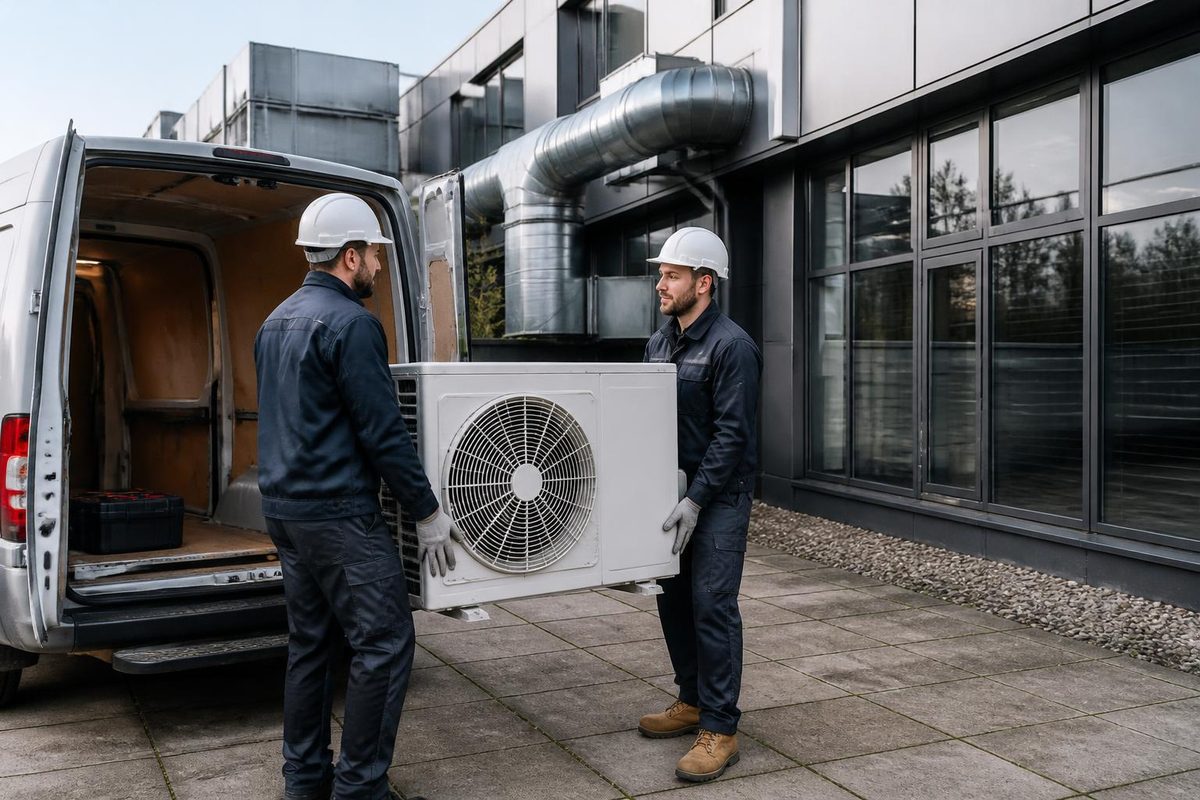
Air conditioning and refrigeration work involves heavy, awkward and sometimes pressurised items. Insurers ask about them because they affect weight, security and what happens in a collision.
Heavy and bulky units
Outdoor condensers and air handling sections can take a van close to its maximum laden weight.
- Overloading can affect a claim
- Proper load restraints are worth having
- Roof-mounted loads change handling
Refrigerant gas cylinders
Engineers often carry cylinders of refrigerant and recovery bottles from site to site.
- Tell the insurer they are carried
- Kept upright and strapped in
- Ventilated load areas are sometimes asked about
Recovery machines and gauges
Recovery units, vacuum pumps, leak detectors and digital manifolds are costly and easy to carry off.
- Usually covered under tools cover
- Overnight limits often apply
- Lockable storage may be a condition
Maintenance contracts
Maintenance contracts and service level response times
Many HVAC firms earn most of their work from planned maintenance contracts across offices, shops, hospitals and data centres. These contracts often set a response time for breakdowns, and that shapes how the vans are driven.
- Planned visits: Engineers drive set routes to several sites, so mileage and area worked are key details.
- Reactive callouts: A promised response window can mean driving at night or through heavy traffic.
- Site access: Clients may ask to see motor and liability certificates before engineers arrive.
- Vehicles placed near contracts: Larger firms base engineers and vans close to each contract, so vehicles are spread across the country.
Cover for injury or damage at a client's premises sits under public liability insurance, which is arranged apart from the fleet policy.
Quote details
What details does a broker need for an HVAC fleet?
An HVAC proposal goes further than a list of registrations. The broker will usually want a sense of the whole operation.
- Mix of vehiclesVans, box vans, cars and any trailers or heavier vehicles.
- Typical loadsUnits, ducting and cylinders, and how they are secured.
- Contract spreadOne region or client sites across the UK.
- Driver poolEngineers, apprentices and supervisors, with ages and records.
- Out-of-hours drivingHow often engineers are called out at night or at weekends.
- Where vehicles are keptA depot, engineers' homes or client sites.
- Fitted equipmentRacking, cylinder cages and anything bolted into the vans.
- Claims recordAccidents, thefts and damage across the fleet.
How it works
One quote form, specialist fleet brokers
Insure Fleet is an information site, not an insurer or a broker. We link you to MyMoneyComparison.com, a comparison service that gives businesses a gateway to brokers who arrange fleet insurance every day.
Start your quote
Get my fleet quote takes you to our partner, MyMoneyComparison.com.
Describe the HVAC fleet
The form asks about the vehicles, the work they do and who drives, so you can be matched with a specialist fleet broker.
Compare and decide
A broker contacts you with options, subject to insurers' acceptance criteria. There is no obligation to buy.
Before you buy
What HVAC contractors ask before switching policy
These are the points that matter most to firms running engineers across many commercial sites.
- Can box vans sit alongside panel vans?Most fleet policies can include both, depending on weight.
- Do refrigerant cylinders need declaring?Carrying pressurised gas is a detail most insurers want to know.
- Is a hire van covered when a vehicle breaks down?A temporary van that keeps a contract running may need adding.
- Do contract response times affect the price?Some insurers ask about urgent and out-of-hours driving.
- Can vans based far from head office be included?Fleet policies usually cover vehicles kept at several addresses.
- Is cover available for engineers on rotating shifts?This helps when vans pass between engineers.
FAQs
HVAC fleet insurance questions
What is HVAC fleet insurance?
It is one motor policy for the vans, cars and other vehicles used by a heating, ventilation and air conditioning business. Every vehicle sits on one schedule with its own use, drivers and level of cover.
Does HVAC fleet insurance cover the units we carry?
The motor policy covers the vehicles rather than the goods inside. Units bought for a client's job are usually covered by goods in transit cover or contract works cover, depending on who owns them at the time.
Are refrigerant cylinders a problem for insurers?
Not usually, as long as they are declared and carried sensibly. Insurers may ask how cylinders are stored and secured, as pressurised gas can add to the damage in a fire or collision.
Can box vans and heavier vehicles go on the same policy?
Box vans up to 3.5 tonnes usually sit on the fleet alongside other vans. Heavier vehicles can often be included too, but they are rated as lorries and may need an operator licence.
Do plumbing and heating firms use HVAC fleet insurance?
Firms whose work is mainly radiators, hot water and emergency plumbing are a closer match for plumbers and heating engineers fleet insurance, while boiler servicing companies with long servicing rounds are covered on gas engineers fleet insurance. HVAC fleet cover is aimed at commercial cooling, ventilation and refrigeration contractors.
Can engineers on different shifts share vans?
Yes, if the policy allows the drivers involved. Named driver cover lists each engineer, while any driver fleet insurance lets anyone who meets the insurer's age and licence terms drive.
Does Insure Fleet sell insurance?
No. Insure Fleet is an information site and an affiliate of MyMoneyComparison.com, a comparison service that gives businesses a gateway to specialist brokers. When you start a quote you continue to MyMoneyComparison.com, and we may be paid a small commission if you are matched with and speak to a broker.
Ready to put your HVAC vans on one policy?
One form, brokers used to commercial contractors, no obligation.