Civil engineering fleet insurance for crew vans, 4x4 pickups and welfare vehicles
For infrastructure contractors running vehicles out of several depots onto highway, rail and utility jobs. One form puts the contractor in touch with specialist brokers who handle larger, spread-out fleets.
- Crew vans, 4x4s and welfare vans
- Towed lighting and generators
- Several depots, many drivers
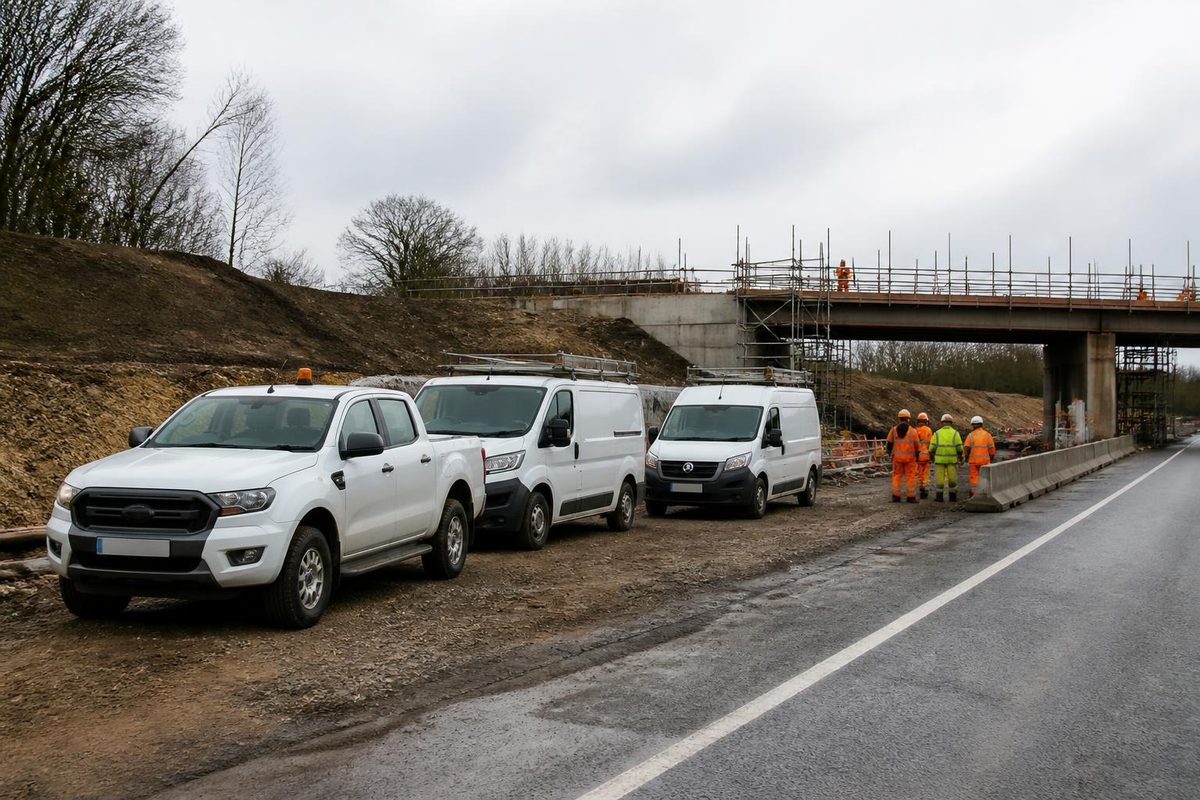
Civil engineering fleet insurance in brief
Civil engineering fleet insurance is a motor policy covering the crew vans, 4x4 pickups, welfare vans and towed equipment an infrastructure contractor uses across its contracts. It is the larger end of fleet insurance for trades, with vehicles spread across depots and drivers numbering well beyond a typical trade firm.
What sets these fleets apart is where the vehicles work: on or beside live roads, on rail access points and in utility trenches. Insurers also want to see how the contractor manages a large pool of drivers, because one policy may cover staff from several regions.
Across the contracts
What vehicles does a civil engineering contractor run?
A civils fleet usually spans cars, light commercials and towed kit, often listed on one schedule as a mixed fleet of cars, vans and towed equipment. The mix changes as contracts start and finish.
Live roads
Vehicles parked inside the works on a live carriageway
Highway and utility crews often park inside a coned area with traffic running alongside. A passing vehicle can strike a parked van, and crews climb in and out next to moving traffic.
Motorway and trunk road works
Vans and pickups stationary in closed lanes or on hard shoulders during shifts.
- Insurers may ask about beacons and rear markings
- Damage by an untraced driver is worth asking about
- Night shifts are often part of the picture
Rail access points
Vehicles parked at track access gates and compounds, often in remote spots overnight.
- Security at unmanned access points
- Off-road tracks to reach compounds
- Long distances from the home depot
Street works for utilities
Vans parked at trenches in towns, with towed kit alongside.
- Short stops across many streets
- Towed kit left at the kerbside
- Busy pedestrian areas around the works
Towed equipment
Welfare units, lighting towers and bowsers behind the pickups
Civils contractors tow a lot of equipment between jobs. The motor policy deals with trailers while they are attached and on the road, and each insurer treats detached kit differently.
- Welfare trailers and units: Often towed to site and left for weeks. Insurers ask whether they are covered on the road only, or while parked too.
- Lighting towers and generators: High-value items towed behind pickups. Declaring them and their values avoids gaps.
- Water bowsers: Heavy when full, which affects the towing vehicle and the driver's licence entitlement.
- Towing limits: Each towing vehicle has a limit, and some drivers' licences restrict what they can tow.
Contractors running tippers and plant trailers for excavation work will find those vehicles covered on groundworks fleet insurance.
Fleet management
What insurers ask a civils contractor about running the fleet
With many drivers across several depots, insurers look closely at how the contractor runs its fleet day to day, not only at the vehicles.
- Depot locationsWhere vehicles are based and how they are secured at each depot.
- Contract typesHighway, rail, utility or general civils, and the share of each.
- Driver numbersHow many staff drive, and whether agency or subcontract drivers do too.
- Driver managementLicence checks, driver training, inductions and incident reporting.
- Telematics and camerasTrackers, forward and rear cameras and how the data is used.
- Towed equipmentWhat is towed, by which vehicles, and its value.
- Claims dataSeveral years of claims across the fleet, broken down by type.
- Shift patternsNight work, weekend possessions and long travel to sites.
How it works
One quote form, specialist fleet brokers
Insure Fleet is an information site, not an insurer or a broker. We link you to MyMoneyComparison.com, a comparison service that gives businesses a gateway to brokers who arrange fleet insurance every day.
Start your quote
Get my fleet quote takes you to our partner, MyMoneyComparison.com.
Describe the contractor's fleet
The form asks about the vehicles, the work they do and who drives, so you can be matched with a specialist fleet broker.
Compare and decide
A broker contacts you with options, subject to insurers' acceptance criteria. There is no obligation to buy.
Before you buy
Questions for the broker on a civil engineering fleet
Larger contractors often have one policy covering very different kinds of work. These points help test it against the contracts actually running.
- Is towed kit covered when detached?Many motor policies stop once a trailer is unhitched.
- Are agency drivers allowed?Some insurers need them named or vetted first.
- How is a strike on a parked works van handled?Especially if the other driver cannot be traced.
- Can vehicles move between depots freely?Some schedules list a base for each vehicle.
- Do telematics change the terms?Some insurers take driver data into account.
- What evidence of cover can clients get?Highway and rail clients often ask for certificates up front.
FAQs
Civil engineering fleet insurance questions
What is civil engineering fleet insurance?
Civil engineering fleet insurance is one motor policy for the crew vans, pickups, cars, welfare vans and towed equipment run by an infrastructure contractor. It lists vehicles across all depots and sets out who may drive and for what use.
Does the policy cover vehicles parked inside roadworks?
The fleet policy covers the vehicles wherever they are on the road, including when parked in a coned-off lane. How a strike by a passing driver is handled, especially an untraced one, is a question worth putting to the broker.
How are drivers handled when there are hundreds of staff?
Larger fleets often use open driving terms with conditions on age, licence and convictions, backed by the contractor's own licence checks. Any driver fleet insurance explains how these terms usually work.
Does claims history matter more for a bigger fleet?
Usually, yes. With many vehicles, insurers can price on the fleet's own claims record and on how it manages risk. Large fleet insurance goes into claims experience and risk management in more detail.
Are lighting towers and welfare units covered on the fleet policy?
They are usually covered for road risks while towed. Cover when they are unhitched and parked on site varies, and some contractors insure them under a separate equipment policy.
What about crew members hurt on the job rather than on the road?
Injury to passengers in a fleet vehicle is part of the motor cover. Injury to staff while they work on site is a separate matter, covered by employers' liability insurance.
Does Insure Fleet sell insurance?
No. Insure Fleet is an information site and an affiliate of MyMoneyComparison.com, a comparison service that gives businesses a gateway to specialist brokers. When you start a quote you continue to MyMoneyComparison.com, and we may be paid a small commission if you are matched with and speak to a broker.
Ready to review your civils fleet?
Set out the depots, vehicles and drivers once and a specialist broker will follow up.